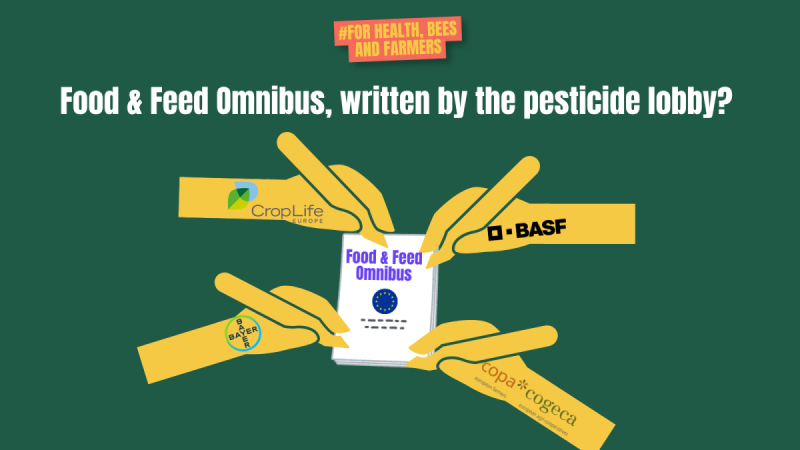
A new investigation report by Corporate Observatory Europe exposes how the pesticide industry and its allies are trying to weaken pesticide regulations and lower the level of protection for people and the environment. Already in 2024, after the elections, in the call for action known as the ‘Antwerp Declaration’, large polluting corporations had listed the omnibus proposals as a key demand to roll back ‘burdensome’ social and environmental standards. This is now evident in the ‘Food and Feed Safety omnibus’. The report, based on dozens of lobbying documents, reveals what has happened backstage all this time. Some highlights:
- Bayer, in tandem with the big farm lobby Copa-Cogeca, lobbied the Commission for unlimited approvals for pesticides. The Commission listened, and delivered. The Omnibus X abandons the periodic safety reviews for pesticides that currently happen every ten or fifteen years.
- Italian co-rapporteurs in the European Parliament, Herbert Dorfmann (EPP) and Michele Picaro (ECR) integrated other industry demands into amendments, including: wider scope for unlimited pesticide approvals, longer grace periods, and using economic assessments to overrule safety.
- Big farm lobby Copa-Cogeca collaborates increasingly openly with the pesticide industry. On the Omnibus X, they use the same slogan “No Ban Without Alternative” and even organised a joint event for MEPs at the Copa-Cogeca offices. It doesn’t seem to be their concern that farmers and their families are most exposed to pesticides.
- An internal Croplife Europe PowerPoint presentation shows the group's discussion on how the slogan “No Ban Without Alternatives” should be operationalised: not only by proposals to weaken the pesticide legislation via the Omnibus, but also via changes to EFSA processes (notably guidance documents), calling for more industry influence over the agency.
According to the analysis, the Commission engaged first with private stakeholders, including the pesticide industry, IBMA and IFOAM Europe, before the process was opened more broadly to civil society, scientists and representatives of sectors such as water.
And the imbalance did not stop there. The meetings declared by the co-rapporteurs include meetings with business and industry representatives, while no meetings with civil society organisations or scientists are mentioned.
Among the demands pushed by pesticide companies, industry associations and farming organisations, including Bayer, BASF, CropLife Europe and COPA-COGECA, were:
- Unlimited approval of pesticide active substances
- Unlimited or longer authorisations for pesticide products
- Easier derogations, with greater weight given to agronomic considerations
- Three-year grace periods following bans
- Attacking the EU’s hazard-based approach
These demands are now visible in the Commission’s proposal, the European Parliament’s draft report and amendments tabled by MEPs.
It is deeply unacceptable that industry interests pushing for weaker pesticide rules appear to be gaining ground at the expense of the protections designed to safeguard people, workers, biodiversity, water and the environment.
MEPs now have a clear choice.
Will they allow this Omnibus to become a vehicle for weakening pesticide regulation, or will they stand up for the level of protection European citizens and the environment are entitled to?
- We urge MEPs to reject the Omnibus proposal and attempts to weaken pesticide safeguards.
- And we urge citizens to raise their voices and demand strong pesticide protections
Read more: Food & Feed Omnibus, co-written by the pesticide lobby | Corporate Europe Observatory
