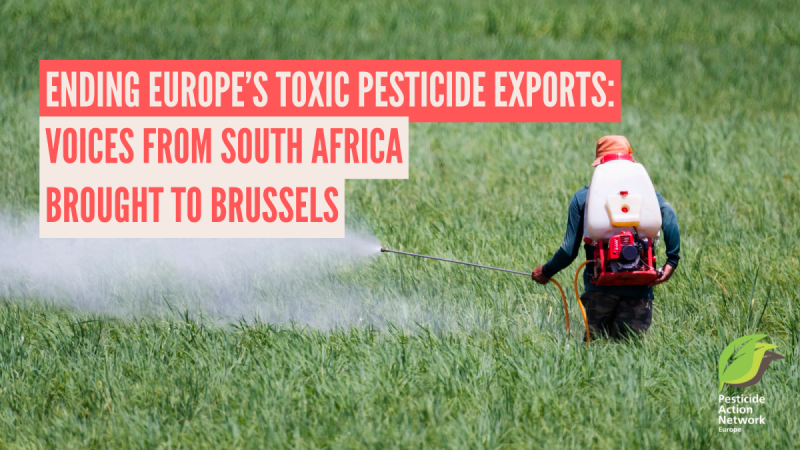
Women farm workers and activists from South Africa, representing the Women on Farms Project, came to Brussels and stood face-to-face with EU policy-makers. Invited by PAN Europe under the End Toxic Pesticide Trade Coalition, they shared firsthand testimonies of pesticide exposure and their health impacts - their daily realities on farms.
The European Commission pledged in 2020 to end the production and export of hazardous chemicals banned within the EU. No legislative proposal has been presented since. In fact, the political momentum in Brussels appears to be weakening, casting doubt on whether this long-standing double standard will be addressed
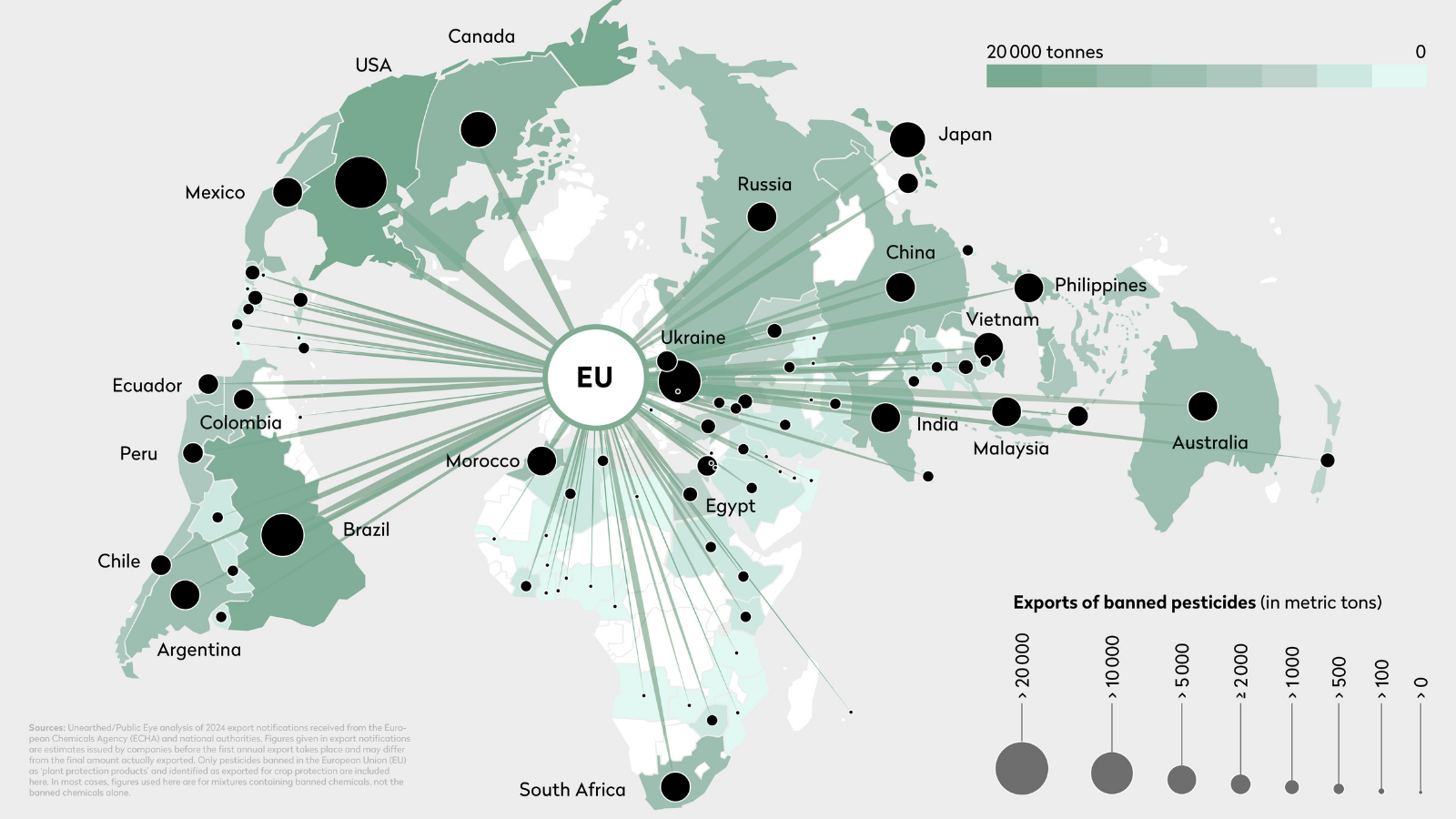
In the meantime, investigations by Public Eye [1] indicate that export volumes continue to rise. In 2024, European pesticide companies exported 122,000 tonnes of banned pesticides, which was 50% more from what it had exported in 2018. In practice, under the consent of the EU, what is considered too dangerous for Europeans continues to be manufactured in Europe and shipped abroad, to destinations with weaker safety laws.
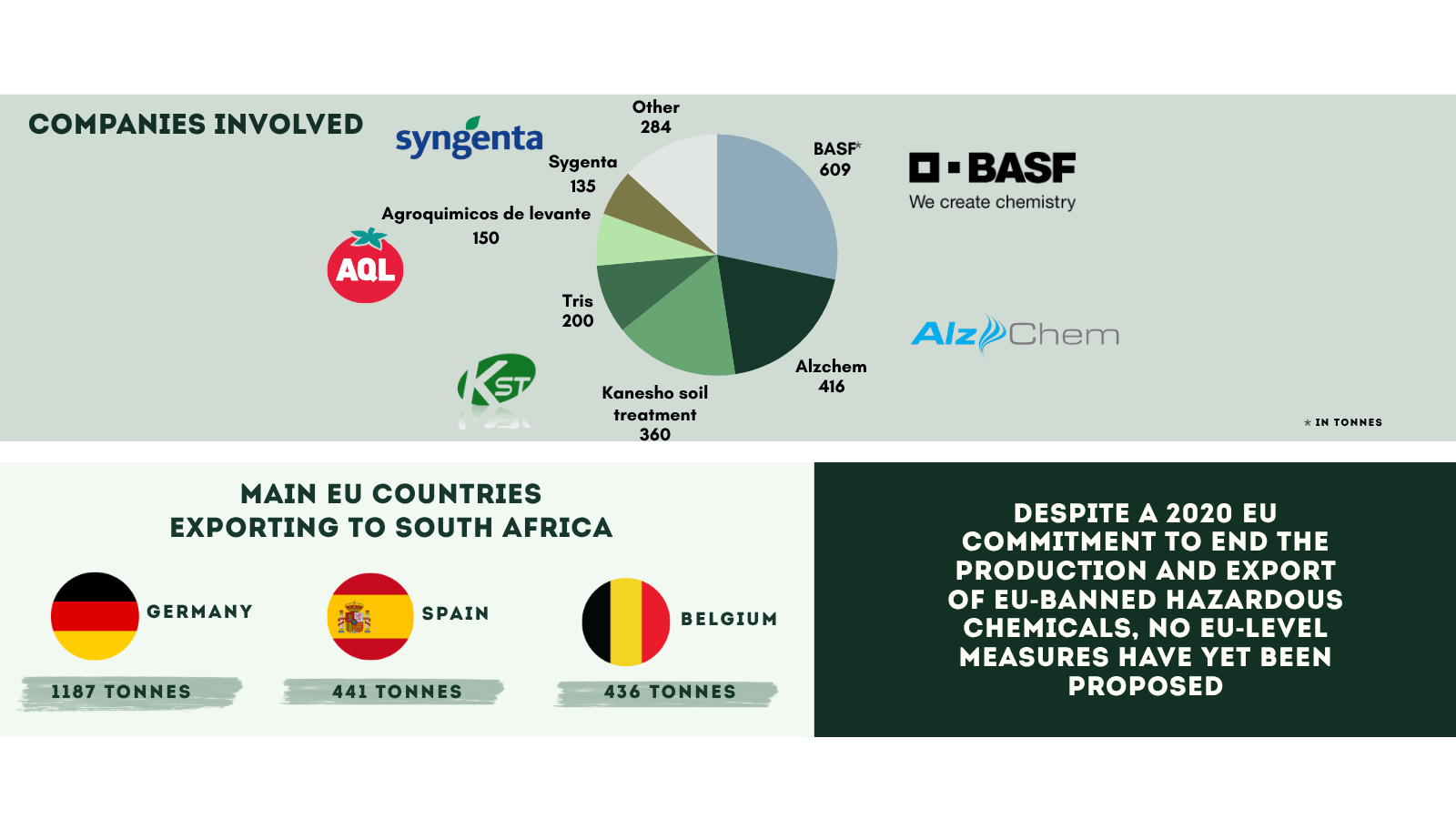
In the context of the African delegation’s visit to Brussels, PAN Europe and the End Toxic Pesticide Trade Coalition published a new infographic (available below) highlighting exports of banned pesticides from the EU, specifically to South Africa in 2024.
South Africa is among the main African destinations for these substances, produced by European companies such as BASF or Alz Chem, but prohibited for use within the EU. The 2024 data show significant volumes of some highly toxic pesticides being shipped:
- 1,3-dichloropropene (1,3-D): 810 tonnes
- Epoxiconazole: 584 tonnes
- Cyanamide: 416 tonnes
These substances are linked to groundwater contamination, carcinogenicity, reproductive toxicity, and endocrine disruption- concerns that led to their ban in the EU. Additional exports include neonicotinoids, the use of which has been associated with pollinator decline, and dithiocarbamate fungicides such as mancozeb, known for endocrine-disrupting effects and reproductive toxicity.
These figures are not just numbers; they reflect a lived reality. Farm workers in South Africa, but also elsewhere, are routinely exposed to such dangerous pesticides through their work and environment, often even without adequate protection or information, worsening their toxic impacts even further.
Bringing testimonies into the policy debate
Throughout the week, the coalition and Women on Farms had the opportunity to engage directly with policymakers from the European Parliament and the European Commission, to share experiences, raise concerns, and communicate the realities of pesticide exposure and the direct impacts of EU decisions on communities abroad.
Moments such as the hearing at the Parliament’s human rights committee (DROI) [2] with the participation of Marcos A. Orellana, UN special rapporteur on toxic chemicals and human rights and Judge Navanethem Pillay, former UN High Commissioner for Human Rights and judge at the ICC; and the cross-party meeting hosted by Member of the European Parliament Thomas Waitz as well as a meeting with the DG Environment of the European Commission [3].
A Lobby Tour through the European quarter further highlighted which companies are involved in the production and export of banned pesticides, revealing how the largest chemical corporations exercise considerable influence in Brussels [4] by spending millions of euros on lobbying to ensure that European laws do not hinder their profits.
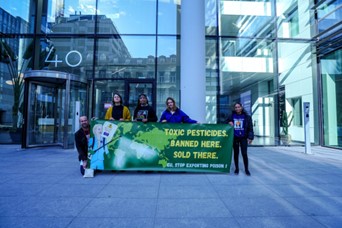
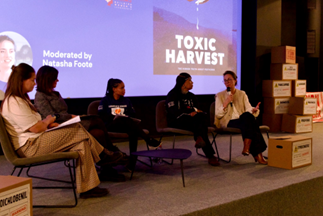
The week also extended beyond institutional spaces: A screening of Toxic Harvest: The Hidden Truth about Pesticides [5], supported by the Rosa Luxemburg Foundation at Cinéma Vendôme, exposed the human and environmental consequences of pesticide use in South Africa. The subsequent discussion, with Colette Solomon (Women on farms), Angeliki Lysimachou (PAN Europe), and MEP Saskia Bricmont, addressed EU double standards and the broader implications for environmental justice.
The testimonies brought to Brussels make clear that inaction has real consequences.
Ending the export of EU-banned pesticides is not a new demand; it is an overdue measure, already previously supported by the European Parliament, Council, United Nations human rights experts and citizens across Europe.
In a recent letter [6], the coalition asked the Irish Presidency of the Council of the European Union to actively work with member states to demand that the European Commission translate its commitment into legislation that effectively prohibits the production and export of banned pesticides, without loopholes or delays. Anything less would perpetuate a system in which protection stops at Europe’s borders, while EU policymakers turn a blind eye to the harm these dangerous chemicals cause in the rest of the world.
Banned pesticides notified for export from the EU (2024) & Companies Involved
Read more:
- Women on Farms Project
- Letter: Ireland’s EU Council Presidency: Advancing EU Action to End the Export of EU-Banned Pesticides
- Full Infographic: Banned EU Pesticides exported to South Africa
Notes:
[1] https://www.publiceye.ch/en/topics/pesticides/sharp-rise-in-eu-export-tr...
[2] https://www.europarl.europa.eu/committees/en/export-of-pesticides-forbid...
[3] https://www.euractiv.com/news/political-shift-in-brussels-clouds-toxic-p...
[4] https://corporateeurope.org/en/2024/05/deadly-exports
[5] https://www.toxic-harvest.com/
[6] https://www.pan-europe.info/resources/letters/2026/05/ireland%E2%80%99s-...
